What Job Is Most Needed in Australia for Foreigners
What Job Is Most Needed in Australia for Foreigners: A Comprehensive Guide
Australia has long been a magnet for skilled foreign workers, thanks to its high living standards, advanced economy, and structured migration pathways. But not all jobs are created equal—some occupations are in exceptionally high demand, and this demand is shaped by government policy, labor market gaps, and demographic trends. If you are a foreigner considering migrating to Australia for employment, knowing which jobs are most needed can significantly boost your chances of success.
In this article, we’ll explore:
-
Why Australia needs foreign workers
-
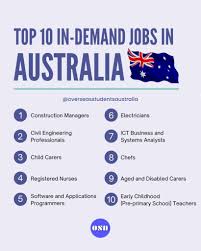
The top in-demand jobs for foreigners in 2025
-
Key industries driving demand
-
Visa pathways for highly needed jobs
-
How to position yourself for these roles
-
Challenges and tips for foreign workers
Why Australia Needs Foreign Workers
Australia faces a persistent skills shortage in several sectors. Several factors contribute to this:
-
Aging population: As Australia’s population ages, demand for healthcare and social services rises steadily.
-
Infrastructure boom: Massive investments in infrastructure (renewables, housing) create a surge in demand for tradespeople, engineers, and construction managers.
-
Technological transformation: Digital transformation, cybersecurity threats, and cloud adoption are pushing demand in IT, software development, and data analytics.
-
Regional labor shortages: Many regional and remote areas of Australia struggle to fill essential jobs, from teachers to electricians.
-
Migration policy: The Australian government continues to use skilled migration to fill critical occupations, especially under visas like the Skilled Independent Visa, employer-sponsored visas, and state-nominated visas.
Because of these dynamics, foreign workers with the right skills are often highly prized by Australian employers—and can also find favorable visa pathways.
Top In-Demand Jobs for Foreigners in Australia (2025)
Based on current labor market trends, migration data, and Skills Occupation Lists, here are the jobs that are most needed by foreign workers in Australia right now.
1. Healthcare & Allied Health
Registered Nurses
Nursing remains one of the top-demand jobs. Australia’s aging population and public health system pressures have made registered nurses (across multiple specialties) essential.
General Practitioners / Doctors
Medical practitioners, including GPs and hospital-based doctors (resident medical officers), are consistently among the most sponsored roles.
Allied Health Professionals
This includes physiotherapists, occupational therapists, medical laboratory scientists, and radiographers.
Aged Care Coordinators
With reforms in aged care and increased funding, there’s rising demand for roles like aged-care coordinators.
2. Information Technology (IT) & Cybersecurity
Software Engineers / Developers
Software development continues to be a core need. Skills in cloud, full-stack development, and related areas are especially valuable.
Cybersecurity Analysts
As cyber threats grow, demand for cybersecurity professionals has surged.
Data Scientists / Data Analysts
Companies across Australia are data-driven and look for people who can analyze, model, and provide insights.
ICT Business & Systems Analysts
These roles act as a bridge between IT and business strategy, helping organizations modernize.
3. Engineering & Construction
Civil, Electrical, and Mechanical Engineers
Massive infrastructure projects—from roads to renewable energy—are fueling demand for engineers.
Construction Project Managers
As large construction and infrastructure projects proliferate, skilled managers who can coordinate these efforts are highly sought.
Skilled Trades: Electricians, Plumbers, Welders
Trades remain a backbone of Australia’s growth. Electricians are particularly in high demand, especially with the renewable energy and housing drives.
4. Education
Secondary & STEM Teachers
Teachers in STEM fields (mathematics, physics, chemistry) and special education are especially needed, particularly in regional and remote areas.
Early Childhood Educators
Qualified early childhood educators are also in shortage, making this a viable avenue for migrants. simonmander.com
5. Hospitality & Tourism
Chefs
Chefs are among the most sponsored occupations. The hospitality sector, especially in tourist-heavy and regional areas, continues to rely on migrant labor.
Restaurant Managers, Hotel Supervisors, Waitstaff
Alongside chefs, restaurant and hotel roles remain in high demand.
6. Agriculture & Farming
Farm Workers, Farmhands, Harvest Labor
Agricultural labor remains an accessible option, especially under seasonal or regional visa schemes.
Agronomists / Agricultural Scientists
For more specialized roles, agronomists and agricultural scientists are also needed, particularly in regional zones. simonmander.com
Visa Pathways That Support These In-Demand Jobs
For foreign workers eyeing high-demand jobs in Australia, the choice of visa matters a lot. Here’s a breakdown of common visa pathways for these roles:
-
Skilled Independent Visa (Subclass 189)
-
Points-based visa.
-
Ideal for those with in-demand occupations on the Skilled Occupation List.
-
-
Skilled Nominated Visa (Subclass 190)
-
Requires state nomination.
-
Many in-demand occupations (e.g. trades, engineers) are more likely to be nominated.
-
-
Skilled Regional Visa (Subclass 491)
-
For working in regional Australia.
-
Good for teachers, trades, and healthcare professionals willing to live outside major cities. easyaussiemigration.com.au
-
-
Employer-Sponsored Visas
-
For workers with job offers: usually Temporary Skill Shortage visas previously (Subclass 482), now replaced or reformed in some cases.
-
-
Global Talent Visa
-
For exceptionally skilled tech professionals, researchers, or executives.
-
Highly favourable for IT, cybersecurity, engineering leaders.
-
How to Position Yourself to Land These High-Demand Roles
If you’re a foreigner aiming to capitalize on these opportunities, here are actionable strategies:
1. Get Your Skills Assessed
Many skilled visas require that overseas qualifications are recognized by Australian assessing authorities (e.g., Engineers Australia, TRA for trades).
2. Pick the Right Occupation
Use the Skilled Occupation List (SOL) or Core Skills Occupation List (CSOL) to ensure your job aligns with visa possibilities.
3. Consider Regional Work
Jobs in regional Australia are often prioritized for migration, especially for teachers, tradespeople, and health workers. easyaussiemigration.com.au
4. Take Relevant Certifications
For IT roles, complement your degree with certifications (e.g., cloud, cybersecurity, data) to stand out.
5. Build Local Experience or Exposure
If possible, gain experience via internships or remote work to make your profile more attractive to Australian employers.
6. Network with Australian Employers
Attend Australian job fairs (even virtually), join LinkedIn groups, and reach out to sponsors. Having a job offer can simplify many visa routes.
7. Stay Updated on Migration Policy
Australia’s immigration policies change. Regularly check government sources or use migration agents to make informed decisions.
Challenges Foreign Workers May Face
While many jobs are in demand, foreign workers still encounter hurdles:
-
Recognition of Overseas Qualifications: Some qualifications may not be accepted directly in Australia, requiring further assessments. The Guardian
-
Visa Competition & Points System: Getting enough points for visas like 189 or 190 requires a competitive profile (age, English, experience, education).
-
Regional Requirements: Regional visas often come with obligations, such as working in a certain area for a set period.
-
Licensing & Certification: For some jobs (especially trades and health), local licensing or registration is needed.
-
Workplace Culture & Adaptation: Understanding Australian workplace norms, practices, and soft-skills expectations is important.
-
Permanent Residency Uncertainty: Some visa options are temporary, or require employer sponsorship, which can complicate long-term planning.
Future Trends: What Jobs Will Stay in High Demand?
Looking ahead, these sectors are likely to continue or grow in importance—making them good bets for foreign workers:
-
Renewable Energy: As Australia pushes toward sustainability, roles like renewable-energy engineers will remain crucial.
-
Cybersecurity & AI: Investment in tech will intensify; demand for AI specialists, data scientists, and security analysts will rise.
-
Aged & Disability Care: The pressure on aged-care infrastructure and community services will grow, needing more nurses and care coordinators.
-
Construction & Infrastructure: With growing infrastructure commitments, project managers, civil engineers, and electricians will be vital.
-
Regional Education: Teachers willing to work in under-served areas will continue to be in demand.
-
Agriculture Technology: As agritech evolves, agricultural scientists and farm managers skilled in modern methods will be more needed.
Why Foreign Workers Are Valuable to Australia’s Labor Market
-
Filling skill gaps: Many local workers are not training fast enough in critical areas like healthcare, welding, and cybersecurity.
-
Driving innovation: International talent often brings fresh perspectives, particularly in tech, engineering, and research.
-
Supporting economic growth: Skilled migration supports sectors that are key to national growth.
-
Bolstering regional growth: Migrants help sustain regional economies by working in less populated—but needed—areas.
Final Thoughts: What Job Should You Target?
If you’re a foreigner looking to work in Australia, here’s a quick cheat sheet:
-
Healthcare: Nurse, GP, allied health
-
Tech: Software developer, cybersecurity analyst, data expert
-
Engineering & Trades: Civil engineer, electrician, construction manager
-
Education: Teacher (especially in STEM), early childhood educator
-
Hospitality: Chef, restaurant manager, hotel supervisor
-
Agriculture: Farmhand, agronomist
Choosing one of these in-demand roles increases your chances not only of finding a job but of securing a visa, getting nominated by a state, and working in a growing industry. Prioritize roles aligned with the Skilled Occupation List, get your qualifications assessed, and be open to regional opportunities.